Saturday, December 21, 2019

Who are you - A Business Analyst Or a Systems Analyst?

Who are you - A Business Analyst Or a Systems Analyst?

According to the BABOK guidelines Business Analyst is the individual who understands the current state of the business(AS-IS) and define the future state (TO-BE) of the business as per the vision of the  stakeholders. Further the business analyst should suggest the steps/ path to achieve the desired stage.
Below is what I have done as a Business Analyst?
In my entire career as a Business Analyst I was assigned to a project in which the stakeholders themselves have decided that they want a system to achieve the desired status of the company and my role was to listen to their requirements and advice them if their requirements can be achieved systematically or not - if NOT workarounds to achieve it.
I never got a chance to understand the business strategy of any company I worked with nor actually understood the business processors beginning to end - yet I saw the piece I was assigned to automate.
I always had one question in my mind- who am I? A Business Analyst or Systems Analyst?
My current engagement is awesome in many ways. Firstly the domain is super interesting and they let me become the Business Analyst I always wanted to be. The business problem of the service area was put on the table and I was given the opportunity to conduct a gap analysis in the current process to decide the state the business would want to achieve the path which is a very well designed system  - 8 months to listen to over 10 departments and 100 stakeholders of their requirements. I observed their work, understood the data elements and integration of  with the whole business  Eco system. Conducted facilitation sessions, workshops, meets, many more to activities to understand the depth of the issue. I referred to each form they filled to see what exactly they require and their pain points.
Lastly the output was a system consisting around 50 modules (Functional Specifications) and approximately integration with 20 other systems in the neighboring systems (Progress Flows Charts/Data Flow Diagrams). Over millions of data data elements will sit on the database per day yet each adds value to the business through the analytic platform.
It is true that the company has to be rich enough to provide the above luxury to the Business Analyst. But is it not an investment for the next 10 years (least).

Business Analysts can be very useful if a company uses them effectively. A Business analyst can bring digital transformation to business  which is key for today's business. 
The BA Times stated, “Organizations are now dependent on business analysts and project managers to guide them through this digital disruption and advise on best practice and emerging technologies. Predictive technologies such as machine learning, Artificial Intelligence and The Internet of Things can now provide industry trends and data patterns that have the power to significantly impact a business and its operations.”
Sometimes a Business Analyst may help the organization to improve the process to make sure its not anymore on loss via business process improvements. 
However I now feel that I am a Business Analyst. I know the business and the system.

What is your view? Who do you think you are- Business Analyst or Systems Analyst or Typist?

Friday, August 16, 2019

Progressive Web Apps - Did you mean Responsive Web Apps or Something New?

"Progressive Web Apps" - It is not "Responsive Web Apps" but an extension.

As we all know Mobile application or Web Application  has become THE  core components of any online business. Customer interact through mobile applications downloaded from the app stores or through web apps.

I will not talk to you about Responsive Web Apps (RWAs) in this article as I already touched it in my previous blog post.

Lets start on .... Progressive Web Apps (PWAs)


What is a PWA?
For me it is the NEXT STEP  of Responsive Web Apps. Rather it is the next version of web apps which is capable of providing the user experience of native mobile applications.
The drawbacks of RWA which have become a reality with PWA. Below are the features of  PWA which are extensions of  RWA-

Offline Mode :- 
PWA will work in Offline Mode - With the advent of HTML5, a feature called Application Cache was introduced. This allows websites to store significant amounts of data offline, and as a result function similar to a  mobile applications. They can cache the whole website and the content so the user don’t need an internet connection to use it.

Speed :-
Progressive Web Apps are highly reliable and efficient when it comes to speed. This allows PWA to load instantly, regardless the speed of the users internet connection.
The capability of caching the information in the app and browser allows PWAs to work faster. They have smooth scrolling, animations, and navigations, allowing users to perceive it as a native application.

Native Features :-
PWA with HTML5, has enabled features such as push notification, native video playback, native video and audio, contacts, alarm, calendar are among other things.

Add Icon to Home Screen :-
RWA is an extended web app. PWA is a web app as well as a mobile app.Therefore users can add an icon to the home screen. This was earlier provided with mobile applications though with PWA, users now can set an icon of any web app in the home.

Full Screen Mode :-
Full-screen mode offers shoppers an immersive experience without the distraction of the URL bar.

Customer Engagement via Push Notifications :-
Immersive experience offered through Progressive Web Apps keeps customers engaged. Web push notifications also provide a channel to engage customers in real-time based on their behavior or location.

Below are some statistics to prove the success rate of PWAs:
Progressive web apps provides a user experience similar to a mobile app which bring more conversions. Many companies have introduced progressive web apps to replace their traditional mobile app experience.
Pinterest saw a 44% increase in user-generated ad revenue, a 50% increase in ad clickthroughs, and 40% increase in users spending. Twitter saw a 65% increase in pages per session and a 20% decrease in bounce rate as compared to the traditional mobile app. AliExpress also saw 2 times more page views, 74% increase in time spent, and 82% more conversions as compared to native apps.
With 20% reduction in bounce rate for Twitter, 53% increase in mobile sessions and 17% more conversions for Lancome, and 160% increase in the shopper sessions for MakeMyTrip, it is time to start building Progressive Web Apps now.

So it is pretty obvious that PWAs has provided much benefits over Mobile Apps, hence has  become a technology trend. Therefore businesses need to stay updated with upcoming tech trends to achive a competitive advantage in the market.

Thursday, August 8, 2019

Responsive Web Apps vs. Mobile Apps

Hello Again !!! Here comes another article after some time.

The reason for  this post  was pure confusion and the struggle I went through to  to understand  the difference between a Responsive Web App and Native Mobile App in deciding the best solution for a project I worked as a Business Analyst.
Here you go- below are  my  findings and conclusion -

To begin with a Responsive Web App is a type of Mobile Web  while  Adaptive Web - creation of multiple versions of web pages to better fit the users device, being the other. However the article targets to comprehend responsive web apps and mobile apps along with its pros and cons.

What is a Responsive Web App-
Responsive web apps  is a normal website which fits in to the screen size of the device which it is viewed. The technology used in implementation makes the site looks fabulous on every device its viewed - desktop or mobile - Phone/ Android or tablet.


Ex: As the business owner I believe that the investment would be much higher if I am to develop a mobile application - hybrid/native , web application  and a mobile web application separately. However  without spending much I would pay and get a responsive web app implemented which caters all types of devices and users.
However I cannot expect my customers to use the application  when there is no internet which is a drawback in a very competitive market.

What is a  Mobile App-
Mobile App is a software product implemented with a specific purpose to achieve a specific goal- ex: online purchase/ loyalty/ manage purchase, downloaded from Apple Store or Play Store and installed in to the mobile application. Targets should be achieved in few clicks.
Mobile applications can be either native or hybrid - native applications serve one operating system where as hybrid serves multiple.

What is  my business requirement and the customer behavior? It is  always to conduct a survey and understand the possible customer segment as at the end of the day  responsive web application or mobile application or anything else serve your customers.

It is less expensive to implement a responsive web application then a  mobile application which requires much effort and time though responsive web applications cannot function without internet connectivity. However mobile applications function well in both online and offline regardless the internet connectivity.
A mobile application provides the ability for the application developer to use native features of the mobile (GPS, Camera etc. or most latest voice recognition, AI, QR codes  or Augmented Reality) and generates sophistication.

Below grid explains more-


However Google recommends Responsive web apps over mobile apps, as google considers it as a best practice.

Lastly if you ask me to select the best out of the two, I would rather say  - it is your business requirement , no hard and fast rule in selecting one,  further the energy and money you are willing to spend on the demand for technology  in the business.

Saturday, July 28, 2018

It Is About "Design Thinking"

Source: https://www.interaction-design.org/literature/article/5-stages-in-the-design-thinking-process

What is Design Thinking and Why?

Design Thinking is a methodology used by designers to solve complex problems, and find desirable, practical, creative resolution to the clients. A design mindset is not problem focused but  solution focused and acting towards creating a preferred future.

Thinking like a designer can change or enhance the way organizations develop products, services, processes or even strategy. It can bring together what is desirable from a human point of view with what is technologically feasible and economically viable.


Source: https://www.ideou.com/pages/design-thinking


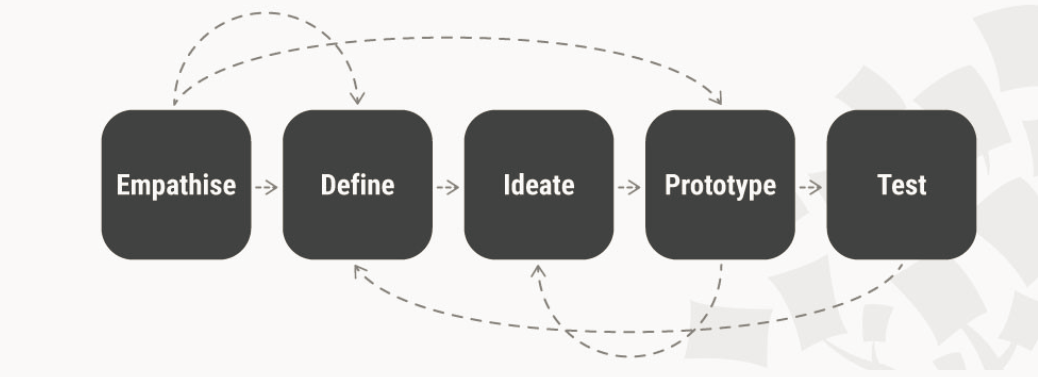
5 Stages of Design Thinking Process ?

The design thinking process has various stages including:

  • Empathize
  • Define
  • Ideate
  • Prototyping
  • Testing 

The steps can occur simultaneously and be repeated.

Empathize

The first step of the design thinking process it to gain understanding or empathize about the problem you are going to solve. Empathy allows design thinkers to set aside his or her own assumptions about the world in order to gain insight into customers and their needs. 
This can be achieved by speaking to the subject matter experts to gain more knowledge about the domain or observing the problem area or even talking and empathizing with people who are experiencing the matter.

Adding my opinion in to this, in requirements gathering I always believe that you need to act dumb to get the information well. This helps you to go in to the shoes of the stakeholder and think about the problem and feel the problem.

Define


During this stage, put together the information gathered during the earlier stage and analyse your observations and synthesize them in order to define the core problems that you and your team have identified. Generate the problem statement.
This stage will help the team to gather great ideas to establish features, functions, and any other elements that will allow them to solve the problems.

Ideate


This means forming or generating ideas. With this solid background formed at the first two stages (Empathize and Define) your now ready to  'think outside the box' to identify new solutions to the problem statement you’ve created, and you can start to look for alternative ways of viewing the problem.

Idea generation can be done by using the below techniques:
  • Brainstorming
  • Brain-write
  • Worst Possible Idea
  • Scamper
Brainstorm and Worst Possible Idea sessions are used to stimulate free thinking and to expand the problem.

You should pick some other idea generating techniques such as focus groups work shops by the end of this phase to help you investigate and test your ideas to find the best way to either solve a problem, or provide the elements required to circumvent the problem.

Always talk of what you believe that should  be there in the system, standing in the customers shoes. Do not ignore any idea but consider every possibility in order to create the best value to the customer. Remember they pay you for this system and you should create value for it. Not to forget the rework you would have to do if you do a unsatisfied/ lame business, it is better to think and do the best as possible in one go. 

Prototype

The aim of this stage is to identify the best possible solution for each of the problems identified during the Empathize, Define and Ideate stages. The prototype do not have to be a half baked application all the time but a user interface narration or even sets of UIs would be enough for this stage. The solutions are implemented as prototypes and are investigated to accepted, improved and re-examined or rejected on the basis of the user experiences. 

By the end of this stage, you should have a better idea of the constraints inherent within the product, the problems that are present, and have a better understanding of how real users would interact with the end product.

Do not forget to consider the UX aspects of the User interfaces (UIs). The age groups of the users, thinking pattern, likes and dislikes to colors and every other small detail. Try to use the standards when designing the UIs.

Test

Test teams should test the complete product using the best solutions identified during the prototyping phase. This is the final stage of an iterative process.

The test he results generated during the testing phase are often used to define the problems. Alterations and refinements are made to the prototype even in this stage in order to rule out problem solutions and derive as deep an understanding of the product and its users as possible.

The results from the testing phase may reveal some insights about users, which in turn may lead to another idea generation or the development of new prototypes. and this is why design thinking is non linear and more flexible in practice.


Source: https://www.interaction-design.org/literature/article/5-stages-in-the-design-thinking-process


Ex: More than one stage may be conducted concurrently by different individuals/groups within the team, or the designers may collect information and prototype during the entire project so as to enable them to bring their ideas to life and visualize the problem solutions. Or as I mentioned testing phase may reveal some insights about users, which in turn may lead to another idea generation or the development of new prototypes.

Below is a great framework to be used for Design Thinking as per my understanding:

Source: https://www.creativityatwork.com/design-thinking-strategy-for-innovation/


Sunday, March 4, 2018

Code Coverage Tool Analysis

What is a code coverage tool?

Code coverage is a methodology which is used to measure and describe how much source code of the program is executed when a specific test suit runs. It gives a percentage value and the user can determine if the source code is well covered or needs improvements or covered more. If the percentage value is high, the test suit has covered and if its law the coverage should be improved.

There are 03 code coverage test methodologies.
  1. Source Code Instrumentation
  2. Byte Code Instrumentation
  3. Run time Information Collection

Instrumentation is being able to analyze the code coverage that a test suit achieves that it is necessary to compile a version of the application in which statements are inserted that monitor the execution of the source code. 
The generation of such modifies version of the program is called instrumentation.

The most famous of the above 3 are Source Code and Byte Code instrumentation.

Source Code Instrumentation :This approach adds instrumentation statements to the source code and compiles the code with the normal compile tool chain to produce an instrumented assembly.

Byte Code Instrumentation : Bytecode Instrumentation Is A Process Where New Function- Ality Is Added To A Program By Modifying The Bytecode Of A Set Of Classes Before They Are Loaded By The Virtual Machine.

Let me now walk you through the most commonly used code coverage tools in the market.


Open- Clover


Open Clover Report


Jacoco


Jacoco Report


Cobertura 


Cobertura  Report


Among the above 3, most famous is Jacoco and Open Clover. 

Open Clover was put in to the open source market very recently and was a very well known commercial product. The team has now made it a fully opensource product.

Jacoco can be described as an extension of the well famous eclEmma code coverage tool implemented by the Eclipse team. Most of the marker researches recommend Jacoco over the other code coverage tools in the market because of its ability to integrate and instrumentation method.

Most open source code coverage tools use Java as the language where as there are many commercial code coverage tools focusing on .Net or other programming languages. 

Please refer the below link for a better comparison between the code coverage tools.

https://confluence.atlassian.com/clover/comparison-of-code-coverage-tools-681706101.html

So that is a very much what we should know about a code coverage tool in selecting one. Please feel free to comment and share your thoughts.

Tuesday, December 19, 2017

Business Intelligence Requirements Gathering - Part 02 : Data Warehouse Bus Matrix

Apologizing the delay, but as promised, here I am writing to you about the bus matrix.

The enterprise data warehouse bus matrix is the essential tool for designing and communicating the enterprise data warehouse bus architecture. According to the Kimball's Group technology independent bus matrix architecture allows incremental data warehouse and business intelligence solutions  and "identifies and enforces the relationship between business process metrics (fact) and descriptive attributes (dimensions)".

The associated Enterprise Data Warehouse Bus Matrix, shown below, is a key design tool representing the organization’s core business processes and associated dimensionality. It’s the architectural blueprint providing the top-down strategic perspective to ensure data in the DW/BI environment can be integrated across the enterprise, while agile bottom-up delivery occurs by focusing on a single business process at a time. (source: https://www.kimballgroup.com/data-warehouse-business-intelligence-resources/kimball-techniques/kimball-data-warehouse-bus-architecture/)

If you look at the below diagram, the rows of the matrix showcase the business processes while the columns displaying the dimensions.  

The design team scans each row to test whether a candidate dimension is well-defined for the business process and also scans each column to see where a dimension should be conformed across multiple business processes. Bus matrix is used as an input to prioritize DW/BI projects with business management as teams should implement one row of the matrix at a time. 

The implementation of this should be of more granular where each business process row has been expanded to show specific fact tables or OLAP cubes. At this level of detail, the precise grain statement and list of facts can be documented.

Below is a sample done for the sales department of a local food manufacturer. (Assume that the most granular level of date is day and the location is city)  


Once this is successfully completed, the BA should start with the working on the visualizing the  dashboard and report. 

I will do my next article on selecting the best visualization to represent the data. Till then please do comment and share your thoughts.

Reference:

https://www.kimballgroup.com/data-warehouse-business-intelligence-resources/kimball-techniques/dimensional-modeling-techniques/enterprise-data-warehouse-bus-matrix/

https://en.wikipedia.org/wiki/Enterprise_bus_matrix


Wednesday, July 5, 2017

Business Intelligence Requirement Gathering - Part 01

The organization I am working for is working towards improving it's business intelligence capabilities. This opened me the doors to learn a brand new subject which I was never exposed to in my career anywhere before.

This is an innocent attempt to collect all my learning to one location which may help any business analyst who is a total novice like to to the huge business intelligence arena.

Just as any other project the very first step of a business intelligence project is a Request For Proposal (RFP).  It is a document that solicits proposal, often made through a bidding process , by an organization interested in procurement of a commodity, service or valuable asset, to potential suppliers to submit business proposals.

As per the request the proposal was  made and submitted which went through many discussions and finally we got the project after many iterations of proposal reviews and negotiation sessions.

So then the Statement Of Work (SOW) which again prepared together with contribution of the legal team.

All done and it is closer to start the requirements gathering phase of the project. This is my very first project and I wanted to learn some DW/BI before going to the client as I need to satisfy the customer and make a good impressions while making sure that the necessary details are gathered and brought  back to the office for the team to implement the solution.

Since the beginning of a well designed Business Intelligence solution is a data warehouse, my first approach was to learn bits and pieces on data warehousing concepts. The learning outcomes until now on  basic data warehousing concepts  are listed below and definitely this added certain level of confidence to me before walking to a client.

Know Little DW/BI 

Know the needful technical and business aspects - jargon/basic concepts/methodologies  always plays handy.For most of the non technical business analysts in the IT industry find this challenging though worth giving a try as I guarantee the level of value it can add to you.

What is a Data Warehouse? A data warehouse is constructed and integrating data from multiple data sources. It can  support analytical reporting and decision making. Further a data warehouse contain more generalized and consolidated data in a multi dimensional way.

Difference between a dataware house and a data mart is that while a data warehouse serves an organizations data mart is focused on on particular business segment. So as a business analyst we might need to collect requirements for a BI solution which supply analytics for the whole organization of a department.


For me a data ware house is also another database with more processed data which has pre-populated data in it.It removes the effort of  querying and  joining multiple tables in the database but have the data readily available and anyone interested can view data faster than in an operational database.

The type of data ware house needed for this assignment is a analytical type as the requirement is to slice- dice and  drill down data  to evaluate sales and marketing performance of the organization.

So me being the business analyst for the BI solution implementation for the XYZ organization, my first assignment is to understand the facts and related dimensions . Now what is facts and what is dimensions?

Fact table contains the numerical and historical data. Ex: Number of Orders Placed, Total Revenue, Quantity goes in to fact list as they are all numerical and organizations use these figures to take decisions on  their business. Data warehouse consultants collect the facts to create fact tables.

Dimensions are categorized by which summarized data can be viewed.Ex: Number of Orders placed can be viewed against the location, time/date/month or even by sales agent. Further Quantity can be viewed against the time by customer by location or even by the sales personnel. The dimensions can create dimension tables.A dimension has its attributes.Ex: Customer dimension has name, address and country as its attributes.

Fact tables and dimension tables together create sachems.

STAR Schema

The fact table is connected to its dimensions in the shape of a star which is the reason why this is called a star schema. Dimension tables are not duplicated/repeated.


Each dimension table alone with its attributes is linked to its fact table and all the data in the schema are de-normalized.

SNOWFLAKE Schema


In the snowflake scheme there can exist tables which are normalized. Further the table structure is more complected and may not be able to provide the expected level of fast data retrials to the end  solution.

The star schema is advised to be used in the projects.


When deriving the dimensions for a DW it is advised to use the most granular level as possible as it ease the analysis process.

I will be write on a BUS MATRIX - the first deliverable of requirements gathering in a DW/BI project  as my next post.

Stay tuned. Next Post is Coming Soon.

P.S: Please feel free to comment on the items which I have not written correct as if will be a good learning to me and everyone else who is following me.

Thursday, November 5, 2015

Ready to walk with the GIANTS?

Great thoughts from Robin Sharma - if you want to walk with a giants towards SUCCESS 

--Release scarcity + adopt generosity as your main way of thinking. 
--Forgive the unforgiven, as you are carrying them on your back. 
--Understand that every person who has shown up in your life arrived to help you become the person you now are. Appreciate and love them. 
--Trust that suffering grows strength and your trials can serve your growth vastly. The best of us who have graced this earth leveraged their pain into greater humility, bravery and love. 
--Commit to doing the projects that terrify you + shifting from accepting good work from yourself to demanding legendary production from yourself. 
--Never miss an opportunity to serve or encourage another human. 
--Refuse to cling to stagnation. Complacency destroys potentially awesome lives. So as you rise to new levels of success and joy, keep optimizing. 
--Aggressively notice the miracles in every so-called average day--they are there for those awake enough to witness them. 
--Smile at strangers, do kind things for zero return + be polite (it's so uncool to be rude). 
--Make a stop doing list so you delete the misuses of your oh so precious time. 
--Less news more books. Period. 
--Be a person of depth, wisdom, understanding, ingenuity, audacity, decency and love. At the end, even the finest of us will have wished we'd loved more.
--Remember that we get what we settle for, so set audacious goals that evoke the fiery brilliance that resides within you. 
--Write hand written thank you notes to your mentors and those who have helped you. In a world of digital, it shows how much you care. 


Believe in your talents + gifts + dreams. 

Thursday, October 1, 2015

What it takes to be 'LIKED'

Likeability is completely under a person’s control and has outlined what it takes to be likeable:

Ask questions
Many people make the mistake of not actually listening to people when they are talking because they are so focused on what it is they want to say, this comes across as rude. To avoid this people should ask questions, show interest in the other person and show that they have been listening.

Turn off your phone
People should commit to a conversation and focus all their energy on that conversation. Not only will they notice that they enjoy the conversations more when they are fully immersed but people will like them more when they are not constantly glancing at their phone or tuning out mid-conversation to reply to a text.

Be genuine
No one likes a fake. People gravitate toward those who are genuine because they know they can trust them. Likeable people are confident enough to be comfortable in their own skin, not pretending to be someone they are not.

Use positive body language
Likeable people are aware of their gestures, expressions and tone of voice. Using an enthusiastic tone, uncrossing arms and maintaining eye contact with the person speaking are all forms of positive body language that draws people in.

Smile
It sounds obvious but people naturally mirror the body language of the person they are talking to. If you want to be liked then smile during a conversation and the person will unconsciously return the favour.

Balance passion and fun
People gravitate toward those who are passionate. Having said that, passionate people can often come across as too serious or uninterested because they tend to be absorbed in their work. Likeable people balance their passion with the ability to have fun. At work they are serious, yet friendly. But outside of work they are also very sociable.

Monday, September 7, 2015

Getting Started with Agile-Scrum Methodology - Planning, Monitoring : Part III

Welcome to another most important section of Agile-Scrum methodology.Planning is one of the pillar stones in project management practice.If you are now thinking of the other pillars  - there are all together 4 pillar stones which are Planning, Organizing, Monitoring and Controlling.All these are equally important though planning is significant and mostly important as it is the stepping stone of the project.

In Agile-Scrum Planning happens in 2 steps.

As explained in Part I prioritized product backlog items are considered for the sprint and during the sprint planning meeting which all the team members participate, they turn the backlog items in to several user stories.

Ex:
Backlog Item: User Authentication

User Stories :
1.As a system administrator users should be able to enter their details and register with the system so that the information can be used for other marketing activities.

2.As a user I should be able to enter my username and the password and login in to my account so that I have maintain my own wishlist.

3.As a system administrator the users should not be able to try the password more than three times so that I can guarantee the security level of the system to the existing customers.

These user story stories needs to be given story points based on their complexity, effort and doubt.

The user story then needs to be broken in to tasks which are more simpler units so that it is more easier and suitable for estimations.

Ex:
As a system administrator users should be able to enter their details and register with the system so that the information can be used for other marketing activities.

Tasks:
user registration form
registration form integration with the email and email generation
database entry
user interface

Then each task needs to be added an hourly estimation using the experience  and the skill level of the developer.

These hours can be used as the sprint estimation and at the end of the project the scrum master can create a graph using the estimated hours against the actual which will provide many information to the stake holders.

So this is simply the planning process of Agile-Scrum.

Please feel free to add your comments and correct me if you think anything needs to be corrected as it will help me as well as the readers of this blog to grow more and more.

Monitoring happens via the daily stand up meetings.This meeting needs to be held everyday for 15 minutes.Each team member needs to talk at the meeting on the tasks they attended, what they are planning to do and any issues faced.Daily stand up meeting keeps the team updated about the current  situation of the project and it creates the platform for the team to understand if they are on the plan or if they have deviated and get back to the original plan.

At the end of each scrum retrospective meeting needs to be hosted and the team with the scrum master, product owner and client if possible needs to attend to the meeting which will help the team to understand what went right and what went wrong.


Sunday, September 6, 2015

Getting Started with Agile-Scrum Methodology - Agile Scrum Team : Part II


SCRUM TEAM is the heat of Agile Scrum.Below are some of the qualities of a Scrum team.It is a self organized cross functional  and a focused team.They believe in each other as in every other team and they work together for a smooth sprint cycle.There is no 'I' but 'WE'.They help each other to solve the impediments which occur during the sprint and make sure to achieve the target or rather the selected user stories for the sprint.

The team communicate with each other during the sprint meeting and make sure that everyone is transparent to each other

Scrum master keeps the team together and drive them for a good and quality software delivery. He/she keeps the team together and drive them towards the end.Scrum master should be great at conflict resolution and bonding people together.

This is not just for Agile Scrum team though I logged it under this but for any team who works towards achieving an objective.